Blog Archives
Remembering the Other “Jack”
Fifty years ago today, two famous men with the nickname “Jack” died. The first and most well-known of these “Jacks” was, of course, President John F. Kennedy. I don’t think it’s still the case today, but in JFK’s day, “Jack” was a common nickname for someone named John. Sadly, this Jack was shot dead in Dallas on November, 22nd, 1963.
 JFK was a big deal to our family, being that we were an Irish Catholic family living in Boston at the time he was elected. I even campaigned for JFK. Actually, that’s not really true; my mom was a volunteer for JFK’s campaign and she was pregnant with me at the time so I campaigned with her up until my birth four weeks before JFK was elected. But I doubt that my mom and I had to campaign very hard; convincing people in predominantly Irish Catholic Boston to vote for JFK was probably about as difficult as persuading the Klu Klux Klan not to vote for Barack Obama.
The world’s news was so focused on the tragedy unfolding in Dallas that horrible day fifty years ago, that the death of the other “Jack” went virtually unreported. Many of you know that “The Other Jack” I’m referring to is C.S. Lewis. This Jack died at his home in Oxford, England about an hour before JFK was assassinated.
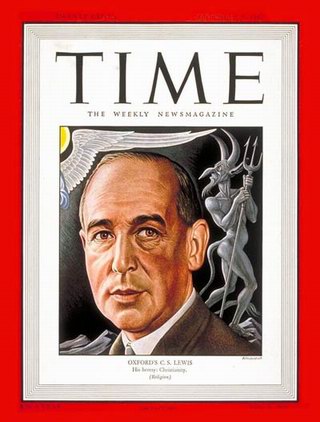 C.S Lewis’ first name was Clive; a name he hated even as a little boy. His dog was named “Jacksie” and when Lewis was four years old, his dog was run over by a car near his home in Belfast, Ireland. After the death of his dog, Lewis told his family that from then on he would only answer to the name “Jacksie.” Thankfully his family and friends shortened his nickname to “Jack.”
While thinking about the deaths of these two “Jacks,” I began wondering which of them had the greatest impact (for good) on the world. Of course, this is a question that only God knows the answer to. In this respect, they’re no different from any of us. We can only testify about people that have had an influence on us personally.
As most of you have seen, there are many television programs commemorating the death of JFK this week and there’s nothing much any of us could add to the coverage. But, like fifty years ago, I haven’t seen anything on TV commemorating the death of C.S Lewis. Through Lewis’ books, and the movies that were made from his books, Christians of all ages feel a personal connection to “the other Jack.” It’s a rare person that can captivate children with stories like “The Chronicles of Narnia” and turn around and challenge cynical adults with books like “Mere Christianity.”
In commemoration of “The Other Jack,” I’d like you to read about three well-known men whose lives were transformed after reading the words of The Other Jack.”
The former “arrogant atheist:”
 Dr. Francis Collins: former leader of The Human Genome Project, current Director of the National Institutes of Health
“Somebody pointed me towards C.S. Lewis’s little book called Mere Christianity, which took all of my arguments that I thought were so airtight about the fact that faith is just irrational, and proved them totally full of holes. And in fact, turned them around the other way, and convinced me that the choice to believe is actually the most rational conclusion when you look at the evidence around you. That was a shocking sort of revelation, and one that I fought bitterly for about a year and then finally decided to accept. And that’s a book I go back to regularly, to dig through there for the truths that you find there…”
After finishing his work with the Human Genome Project, Collins wrote a book titled, “The Language of God.” “The God of the Bible is also the God of the genome,” he writes. “He can be worshiped in the cathedral or in laboratory.”
The former corrupt Presidential adviser:
 Charles “Chuck” Colson: Nixon adviser who was snared by Watergate
Colson described his conversion to Christianity as a post-Watergate moment when a friend read him a passage from C.S. Lewis’s Mere Christianity about pride. “I spent an hour on the side of the road right next to my friend’s home, crying, thinking about my wife, wanting to know God, wanting to be clean. ”
After serving seven months of his prison sentence, Colson founded Prison Fellowship, a Christian outreach to prisoners and ex-prisoners that would eventually become the largest ministry of its kind in the United States.
“As long as you are proud you cannot know God. A proud man is always looking down on thing and people: and, of course, as long as you are looking down you cannot see something that is above you.”
― C.S. Lewis, Mere Christianity
The former pride-filled businessman:
 Thomas Monaghan: Founder of Domino’s Pizza, Chancellor of Ave Maria University

Monaghan had just finished reading Mere Christianity and could not get the chapter titled “The Great Sin” (pride) out of his head. “[It] hit me right between the eyes.” “I realized that all I was trying to do was have more than other people…I thought, ‘If pride is the greatest sin of all, I’ve got to be the greatest sinner of all.”
That night, Monaghan was barely able to sleep. He awoke the next morning and proclaimed that he was taking what he calls a “millionaire’s vow of poverty.” He immediately stopped construction on his new mansion and began selling his “toys;” expensive cars, yacht and even the Detroit Tigers baseball team.
Even if a person lives to be a hundred, it’s nothing compared to eternity. For good or bad, the legacy we leave influences people for generations. They might have phrased it differently, but I believe this is what all three of these men came to realize. It’s something we all should keep in mind.
Prioritizing Our Hopes
When you go through a trial, especially an extended trial that disrupts or even destroys your earthly hopes and dreams, you either learn to focus and depend more on your eternal hope or slide further into despair.
I imagine that every Christian that has gone through an extended trial will remember coming to this difficult crossroad and facing this choice. In truth,  it’s a decision we should have made when we committed to follow Christ – whether or not we were going through a trial at the time. By definition, a Christian is someone whose primary hope is an eternal hope in Christ.
“…we who have taken refuge would have strong encouragement to take hold of the hope set before us. This hope we have as an anchor of the soul, a hope both sure and steadfast…” (Hebrews 6:18-20)
I know that God wants us to have hopes in and for this life, but, for the Christian, those hopes must be secondary to our heavenly hope. Our heavenly hope must govern our earthly hopes. This is the only formula that leads to the “Abundant life” that the Bible talks about. If Jesus is not the Christian’s primary hope, he or she will have a really difficult time when (not if) a trial comes. Even when everything is going great (by the world’s standards), the Christian that does not have his or her hopes in order will not be experiencing the inner joy and peace that the Bible tells us we should have.
Unfortunately I speak from experience. If asked, I probably would have said that eternity was my primary hope before being diagnosed with ALS, but  looking back now I really don’t think it was. It’s so easy to get caught up in our career, our marriage, raising kids, our homes and so many other things involved in day-to-day life that, without even realizing it, our earthly hopes and dreams can become our primary focus.
In this context, I think it’s fair to say that hope and love are synonymous. If Christ isn’t our primary hope, He is not what the Bible calls “our first (most important) love” either. I remember when I began reading the Bible, I had a real hard time with the following verse: “He who loves father or mother more than Me is not worthy of Me; and he who loves son or daughter more than Me is not worthy of Me.” (Matthew 10:37)
Probably because I didn’t understand Christ’s nature at that time, His demand seemed harsh and even narcissistic. After reading the whole New Testament and getting a better understanding of His selfless nature, I realized that His demand had nothing to do with harshness or ego; it is a simple matter of priorities. It’s only by loving Christ more than anyone or anything that we are able to demonstrate His unconditional love to and for others. Likewise, it’s only when Christ is our greatest hope that we are able to fully appreciate and enjoy our earthly hopes. And, it’s only when Christ is our primary hope that we will know if our secondary hopes are also God’s hopes for us.
One Day At A Time
At the beginning of this trial, so many people, mostly long-time Christians, would advise me to “Just take one day at a time.” I’m sure that every one of these wise people thought they were the first to give me this sage advice. Of course, I always acted as if they were the first to give me that advice and I politely thanked them. (If you are one of those that offered me this advice 16+ years ago, I’m sorry I didn’t tell you that a hundred people already gave me that same advice).
To be honest, even though a hundred people repeated this “Take one day at a time” cliché to me, I really didn’t understand at that time exactly what it meant. Like so many clichés, I think people throw them out to fill dead air space in awkward moments when they have nothing else to say. But, I now know this advice is much more than a wise-sounding cliché and the title of an old Southern Gospel song; I discovered it’s also a Biblical principle.
Let me explain how I came to this conclusion.
The Christian going through a trial will quickly figure out something they wish that they’d known all along—today is all that we can properly manage or were meant to manage. Agonizing over our yesterdays and worrying about our tomorrows is just too great of a burden to carry; it will literally overwhelm us emotionally, spiritually and even physically.

In chapter sixteen of the book of Exodus, while in the wilderness (a Biblical metaphor of a trial), God fed the children of Israel with Manna. Jesus said that Manna was “bread that came down out of heaven.” This bread had a very short expiration date; it was only good for that day. If you attempted to put it in a Ziploc bag to save it for the following day, as some tried to do, it would spoil and you’d find maggots crawling on it. God was trying to teach them to trust Him only for today—yesterday’s “bread” is useless (unless you like maggot protein) and tomorrow’s bread hasn’t yet been delivered.
“Give us this day our daily bread.” (Matthew 6:11)
The Old Testament uses “types and shadows” of things to come when the Messiah arrived. As Jesus said; “Do not think that I came to abolish the Law or the Prophets; I did not come to abolish but to fulfill.” (Matthew 5:17)
Manna was a type and shadow of Jesus; He’s our daily bread—our spiritual sustenance; “I am the bread of life. Your fathers ate the manna in the wilderness, and they died…I am the living bread that came down out of heaven; if anyone eats of this bread, he will live forever; and the bread also which I will give for the life of the world is My flesh.” (John 6:48-51)
In a very real sense, the life of faith in Christ is only about today; we’re told to forget about yesterday and not to worry about tomorrow:
“…one thing I do: forgetting what lies behind and reaching forward to what lies ahead, I press on toward the goal for the prize of the upward call of God in Christ Jesus.” (Philippians 3:13-14)
[Between these two passages is a day we call “today.”]
“So do not worry about tomorrow; for tomorrow will care for itself. Each day has enough trouble of its own.” (Matthew 6:34)
I believe that we should do everything within our power to resolve our past (asking God and those we’ve wronged for forgiveness, paying our debts, etc.) and to plan for our future. But I don’t believe that God designed us to carry guilt from our past or to worry about our futures. Christ suffered and died to offer us forgiveness of our past and to secure our eternal futures in heaven. Knowing this puts our earthly troubles in perspective. We can live in peace, joy and hope one day at a time because: “Jesus Christ is the same yesterday and today and forever.” (Hebrews 13:8)
This I recall to my mind, therefore I have hope. It is of the Lord’s mercies that we are not consumed, because his compassions fail not. (Like Manna) They are new every morning: great is thy faithfulness. (Lamentations 3:21-23)
Why Me?
Over the years I’ve had ALS, I’ve become convinced that for a Christian to retain hope in the midst of a difficult trial, he or she must believe that God allowed the trial for a purpose; a purpose greater than what God would have been able to accomplish in and through that person apart from the trial.
“…even though now for a little while, if necessary, you have been distressed by various trials, so that the proof of your faith…may be found to result in praise and glory and honor at the revelation of Jesus Christ…” (1 Peter 1:6-7)
I think every Christian that goes through a difficult trial will eventually ask “Why me?”
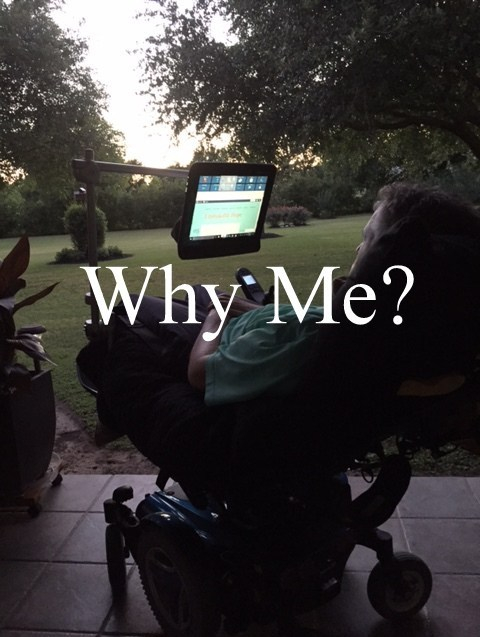
But, I’ve learned that our motive behind asking this seemingly simple question says a lot about how we view God – and also a lot about how we view ourselves.
The first man asks the question like this: “Why me; out of 7 billion people in the world, why did I get ALS (or whatever)?”
He’s really asking, “Why didn’t God put this horrible trial on one of the other 7 billion people?”
This man has a warped view of God and an exalted view of himself. He views his trial as pointless, and he thinks that he should somehow be exempt from the suffering of humanity.
I know what I said about this first man sounds harsh and judgmental, but I know this man well; in a spiritual and emotional sense, I wrestled with him for several months after being diagnosed with ALS.
Thankfully, with the help of God’s word, wise counsel from Christian friends and a well-timed conversation with our non-Christian next-door neighbors, I began to see that there might be a purpose, an eternal purpose, behind my trial. I defeated that “woe is me” man who was fighting to take control of my thoughts and emotions. (More about our next-door neighbors further down).
The second man asks the question like this: “Why me; what’s God’s purpose behind allowing this horrible trial?”
This man has the correct view of God and of his place in the world. As a Christian, this man knows that God wouldn’t have allowed this trial unless He had a greater purpose, a purpose that outweighs the suffering this man would have to endure (from his trial).
“And we know that God causes all things to work together for good to those who love God, to those who are called according to His purpose.” (Romans 8:28)
That verse can only be true if we have an eternal (“Big Picture”) view of our trial. God still heals and performs miracles, and I believe that we should always pray for that result. (Never give up on God doing miracles!)
Regardless of the outcome, God can bring about eternal good from every trial.
In a hundred years, the eternal good that comes from our trial will be the only thing that matters.
A difficult trial (usually) causes the Christian to focus more on the spiritual and the eternal things because, by comparison, the temporal and the material things begin to look more and more insignificant.
Back to our next-door neighbors: Mike and Lorraine were not followers of Christ when we met them. Of course, we did our Christian duty and invited them to church and tried to share the “Good news” with them. Even our girls (then 4 and 7) invited them to church, but all to no avail.
Mike and Lorraine later told us that they mocked us in private. I told them that I could relate because, before making a commitment to follow Christ, I mocked Christians too. Let’s be honest, making fun of Christians is so easy.
But, after I was diagnosed, Mike and Lorraine began to reexamine the faith that was sustaining our family through this trial. Lorraine told me:
“…When you were diagnosed with ALS I began to see a man who held no anger with the God that ‘allowed’ this to happen. Then you began to demonstrate trust in God’s plan. I saw your faith and I saw two little girls accept what God was doing in your lives and I began to wonder how such young children could love God unconditionally. I opened my heart first to the possibility that this might be a good thing for me as well. Then I finally got it and allowed my brain to accept the basic truth that God is only good, loving and faithful…”
Mike and Lorraine made a commitment to follow Christ and faithfully attend church and share their faith with others. (Now people probably make fun of them).
Would Mike and Lorraine have made a commitment to follow Christ if we had not gone through this trial? Obviously, only God knows the answer to questions like this. The only thing I know for sure is that this trial has strengthened my faith and has also given me more confidence in sharing that faith.
But, I admit that difficult trials can feel like you’re serving a prison sentence, especially when you have ALS and you’re imprisoned in your own body. However, the Apostle Paul wrote much of the New Testament while imprisoned. And, many of his fellow prisoners and the guards that observed Paul, became followers of Christ. Only Jesus can spread a message of hope through a prisoner – this is truly Unshakable Hope!
UPDATE: Sadly, Mike went through a long battle with cancer and is now with Christ in heaven. I am looking forward to seeing him again.
I hope I’ll see you there also.
“Now I want you to know, brethren, that my circumstances have turned out for the greater progress of the gospel, so that my imprisonment in the cause of Christ has become well known throughout the whole praetorian guard and to everyone else, and that most of the brethren, trusting in the Lord because of my imprisonment, have far more courage to speak the word of God without fear.” (Philippians 1:12-14)
(I have made changes to my blog, please let me know if you are having problems with it loading…)
More than just a dream
I had a vivid dream last night – In this dream I was completely healed and whole.
The dream began with me simply stepping out of bed, which is something I haven’t been able to do in over 15 years. I could walk, talk, eat, dress myself and do everything else that I was once able to do. Mary and I were so excited that we began calling all of our family and friends and then we began visiting people at their homes and offices (Mary drove the car because I don’t have a driver’s license and the only thing I’ve driven in last 15 years is a wheelchair).
The dream was so real-to-life that I was telling Mary all the places I wanted to travel to and all the restaurants I wanted to try. I was even making practical plans like getting a driver’s license and making an appointment with the doctor to have my feeding tube removed etc. As you can probably imagine, this was so exciting; more so than winning a billion dollar lottery! But that incredible excitement soon turned to great disappointment when I awoke from this vivid dream at 4:15 this morning and realized I couldn’t even uncross my feet, let alone get out of bed.
Then my great disappointment turned back into incredible excitement when I remembered that, regardless of what happens in this life, one day I KNOW that I WILL be healed and whole! One day “…there will no longer be any death; there will no longer be any mourning, or crying, or pain…” (Revelation 21:4)
There was a time in my life that I feared death and the unknown in general. I later found out that these fears are quite common. But, as strange as it might sound, ever since I committed to following Christ and began believing the promises of God’s word, my fear of death has been replaced with an excitement of what lies in store for me after this brief and fragile life is over. Christ died and rose again to free us from sin AND from the fear of what lies ahead – “…only by dying could He (Jesus) break the power of the Devil, who had the power of death. Only in this way could he deliver those who have lived all their lives as slaves to the fear of dying.” (Hebrews 2:14-15 NLT)
 Unshakable Hope