Blog Archives
Life Goes On
“Life Goes On”
Whether we’re going through the worst of times or the best of times, history and our own experiences show us that life does go on. This is true, but I don’t recommend saying “life goes on” to someone who is grieving the loss of a loved one.
“There is an appointed time for everything.
And there is a time for every event under heaven —
A time to give birth and a time to die…
A time to weep and a time to laugh;
A time to mourn and a time to dance.” (Ecclesiastes 3:1-4)
I thought about the above passage last week when our daughter gave birth to a beautiful seven pound girl on Wednesday, then a close friend died of cancer on Friday – “A time to give birth and a time to die.”
Those who are grieving and those who are rejoicing have this in common – life goes on for both of them.

It was a beautiful Friday afternoon in 1996 that the neurologist informed me that I had ALS and would likely be dead in three or four years (so much for predictions). I vividly remember driving home that day in stop-and-go traffic. I was exhausted after three long days of examinations so Mary was driving and I spent much of that long drive home staring out the window at the other drivers. I imagined that they were thinking about dinner or maybe they were making plans for the weekend ahead. In the midst of horrible news, when it seems that our life will never be the same, the world seems like such a cold and cruel place when you look around and realize that life goes on just as it always has.
Compared to life’s great highs and lows, day-to-day life can seem so trivial. When we experience the extreme highs and lows, we tell ourselves that we’ll never again settle for the trivial life. But our emotional or spiritual highs and lows gradually find their old balance, and we return to a mundane normalcy. I think this is the root cause of much of the addiction and depression we see around us; “life goes on” is difficult for many people to cope with.
What’s the answer?
Even for someone that’s been paralyzed by a horrible disease and can no longer eat or speak, “life goes on” can be a great message if you truly learn to “Rejoice with those who rejoice, and weep with those who weep.” (Romans 12:15)
I try not to focus on the personal and professional “highs” (or the financial gains) that I’ve missed out on over the last 19 years. Instead, I make a conscious effort to focus on the good things in my life, like our beautiful new granddaughter, and to share in the highs and lows of others. Living vicariously through others is not the life that I envisioned, but years ago I concluded that the only alternative was to throw a pity party and make myself and everyone around me miserable. I’ve been to several pity parties, and I didn’t like the company (me, myself and I) or the hangover of guilt.
Life is hard, but it’s much easier if we surround ourselves with people that won’t only rejoice with us in the good times but will also support us in the difficult times. I’m so thankful that Mary and I have family and friends like this.
For my daughter, her husband, their son and their beautiful baby girl, life goes on.

For the family of our friend that passed away last Friday, life goes on.
But the great news is that the friend we lost was a committed follower of Christ so life goes on for him also.
“My sheep hear My voice, and I know them, and they follow Me; and I give eternal life to them, and they will never perish; and no one will snatch them out of My hand.” (John 10:27-28)
“He will wipe away every tear from their eyes; and there will no longer be any death; there will no longer be any mourning, or crying, or pain…” (Revelation 21:4)
Life goes on!
Thinking About Death
When I was a kid, I had a friend I’ll call “Bubba.” (There were no kids called Bubba where I grew up so I figure that’s a safe name to go with). Bubba was a high-maintenance friend that never called before coming over and always seemed to show up at my house when I was in the middle of doing something important, like watching Gilligan’s Island. He was hyper and never stopped jabbering on about stuff I wasn’t the least bit interested in. No matter how disinterested I acted, he would stay for hours and would even invite himself to dinner. To my immature and selfish mind, Bubba was annoying.
Before becoming a follower of Christ, I viewed thoughts and discussions about death much like I viewed Bubba knocking at my door – an unwelcome annoyance. After becoming a follower of Christ and coming to believe that my eternity in heaven was secured, I basically put the issue of death on a shelf thinking that one day, when I was old and gray, I would have to take it down, dust it off and deal with it. Even as a Christian, I still viewed death as “Bubba.” I never thought that welcoming death into my thoughts and prayers every day would be one of the best decisions of my life.
Old age, tragic accidents and horrible illnesses remind us that invincibility (in these bodies) is a  myth; we are deceiving ourselves. ALS jolted me out of that denial comfort zone and forced me to face death head on and it’s been the most life-transforming experience. I hope to convince others that thinking about death on a daily basis is good for us emotionally and spiritually. This is the exact opposite of what I believed before ALS invaded my life.
“…we had the sentence of death within ourselves so that we would not trust in ourselves, but in God who raises the dead…” (1 Corinthians 1:9)
A few months ago I read an article that listed the top 5 regrets of the dying. They are as follows:
I wish I’d had the courage to live a life true to myself, not the life others expected of me.
I wish I hadn’t worked so hard.
I wish I’d had the courage to express my feelings.
I wish I had stayed in touch with friends (Bubba, where are you?)
I wish that I had let myself be happier.
I suppose everyone’s list of deathbed regrets would vary from the above list, but in truth we’ll only have one regret on our deathbed: “I wish that I hadn’t lived in denial that this day would come.” All of our regrets grow out of denial about our death. One would think, as I once thought, that thinking about our death, putting ourselves on our deathbed, every day would be depressing, but I’ve discovered that the opposite is true.
 Like me, Ebenezer Scrooge wasn’t changed by reflecting on his past or even by discovering how others viewed him; he was only transformed when he came to terms with his own mortality. Obviously “A Christmas Carol” is not based on the Bible, but I believe Dickens got that part right.
“…that I may know Him and the power of His resurrection and the fellowship of His sufferings, being conformed to His death…forgetting what lies behind and reaching forward to what lies ahead…” (Philippians 3)
We rightly associate Easter with life, but Jesus’ whole mission was about defeating death. He had to face death before He could defeat it and so must we.
Thankful
When I was diagnosed with ALS in 1996, at the age of 36, the Neurologist’s prognosis was that I probably would not live to see my 40th birthday. Our girls were only seven and four years old at that time.

Lauren, Leah and me about the time I was diagnosed
I naturally thought of everything I would miss; like high school and college graduations, interrogating their dates, giving them away on their wedding day and the birth of my grandchildren.
I am so thankful that the Neurologist’s prediction was wrong:
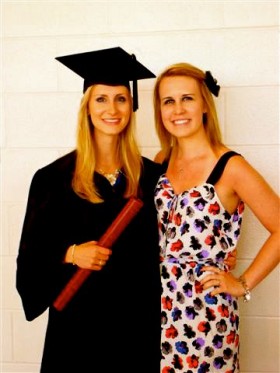
I’ve lived to see both of our daughters graduate from high school and college.

I gave Lauren away on her wedding day two years ago.

Lauren and James
And last week I became a Grandfather!

Lauren and Jude
Because heaven is our ultimate future and Christ is our hope, the following verse is true for all Christians – even those of us that are facing difficult trials and those who’ve gone on to their ultimate future at an early age:
“For I know the plans that I have for you,’ declares the LORD, “plans for welfare and not for calamity to give you a future and a hope.” (Jeremiah 29:11)
Remembering the Other “Jack”
Fifty years ago today, two famous men with the nickname “Jack” died. The first and most well-known of these “Jacks” was, of course, President John F. Kennedy. I don’t think it’s still the case today, but in JFK’s day, “Jack” was a common nickname for someone named John. Sadly, this Jack was shot dead in Dallas on November, 22nd, 1963.
 JFK was a big deal to our family, being that we were an Irish Catholic family living in Boston at the time he was elected. I even campaigned for JFK. Actually, that’s not really true; my mom was a volunteer for JFK’s campaign and she was pregnant with me at the time so I campaigned with her up until my birth four weeks before JFK was elected. But I doubt that my mom and I had to campaign very hard; convincing people in predominantly Irish Catholic Boston to vote for JFK was probably about as difficult as persuading the Klu Klux Klan not to vote for Barack Obama.
The world’s news was so focused on the tragedy unfolding in Dallas that horrible day fifty years ago, that the death of the other “Jack” went virtually unreported. Many of you know that “The Other Jack” I’m referring to is C.S. Lewis. This Jack died at his home in Oxford, England about an hour before JFK was assassinated.
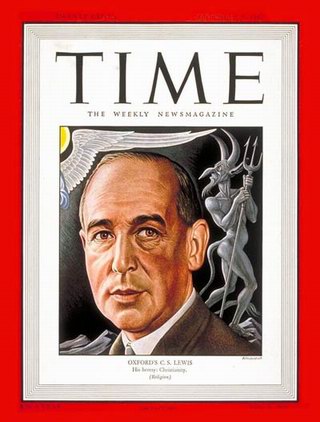 C.S Lewis’ first name was Clive; a name he hated even as a little boy. His dog was named “Jacksie” and when Lewis was four years old, his dog was run over by a car near his home in Belfast, Ireland. After the death of his dog, Lewis told his family that from then on he would only answer to the name “Jacksie.” Thankfully his family and friends shortened his nickname to “Jack.”
While thinking about the deaths of these two “Jacks,” I began wondering which of them had the greatest impact (for good) on the world. Of course, this is a question that only God knows the answer to. In this respect, they’re no different from any of us. We can only testify about people that have had an influence on us personally.
As most of you have seen, there are many television programs commemorating the death of JFK this week and there’s nothing much any of us could add to the coverage. But, like fifty years ago, I haven’t seen anything on TV commemorating the death of C.S Lewis. Through Lewis’ books, and the movies that were made from his books, Christians of all ages feel a personal connection to “the other Jack.” It’s a rare person that can captivate children with stories like “The Chronicles of Narnia” and turn around and challenge cynical adults with books like “Mere Christianity.”
In commemoration of “The Other Jack,” I’d like you to read about three well-known men whose lives were transformed after reading the words of The Other Jack.”
The former “arrogant atheist:”
 Dr. Francis Collins: former leader of The Human Genome Project, current Director of the National Institutes of Health
“Somebody pointed me towards C.S. Lewis’s little book called Mere Christianity, which took all of my arguments that I thought were so airtight about the fact that faith is just irrational, and proved them totally full of holes. And in fact, turned them around the other way, and convinced me that the choice to believe is actually the most rational conclusion when you look at the evidence around you. That was a shocking sort of revelation, and one that I fought bitterly for about a year and then finally decided to accept. And that’s a book I go back to regularly, to dig through there for the truths that you find there…”
After finishing his work with the Human Genome Project, Collins wrote a book titled, “The Language of God.” “The God of the Bible is also the God of the genome,” he writes. “He can be worshiped in the cathedral or in laboratory.”
The former corrupt Presidential adviser:
 Charles “Chuck” Colson: Nixon adviser who was snared by Watergate
Colson described his conversion to Christianity as a post-Watergate moment when a friend read him a passage from C.S. Lewis’s Mere Christianity about pride. “I spent an hour on the side of the road right next to my friend’s home, crying, thinking about my wife, wanting to know God, wanting to be clean. ”
After serving seven months of his prison sentence, Colson founded Prison Fellowship, a Christian outreach to prisoners and ex-prisoners that would eventually become the largest ministry of its kind in the United States.
“As long as you are proud you cannot know God. A proud man is always looking down on thing and people: and, of course, as long as you are looking down you cannot see something that is above you.”
― C.S. Lewis, Mere Christianity
The former pride-filled businessman:
 Thomas Monaghan: Founder of Domino’s Pizza, Chancellor of Ave Maria University

Monaghan had just finished reading Mere Christianity and could not get the chapter titled “The Great Sin” (pride) out of his head. “[It] hit me right between the eyes.” “I realized that all I was trying to do was have more than other people…I thought, ‘If pride is the greatest sin of all, I’ve got to be the greatest sinner of all.”
That night, Monaghan was barely able to sleep. He awoke the next morning and proclaimed that he was taking what he calls a “millionaire’s vow of poverty.” He immediately stopped construction on his new mansion and began selling his “toys;” expensive cars, yacht and even the Detroit Tigers baseball team.
Even if a person lives to be a hundred, it’s nothing compared to eternity. For good or bad, the legacy we leave influences people for generations. They might have phrased it differently, but I believe this is what all three of these men came to realize. It’s something we all should keep in mind.
Prioritizing Our Hopes
When you go through a trial, especially an extended trial that disrupts or even destroys your earthly hopes and dreams, you either learn to focus and depend more on your eternal hope or slide further into despair.
I imagine that every Christian that has gone through an extended trial will remember coming to this difficult crossroad and facing this choice. In truth,  it’s a decision we should have made when we committed to follow Christ – whether or not we were going through a trial at the time. By definition, a Christian is someone whose primary hope is an eternal hope in Christ.
“…we who have taken refuge would have strong encouragement to take hold of the hope set before us. This hope we have as an anchor of the soul, a hope both sure and steadfast…” (Hebrews 6:18-20)
I know that God wants us to have hopes in and for this life, but, for the Christian, those hopes must be secondary to our heavenly hope. Our heavenly hope must govern our earthly hopes. This is the only formula that leads to the “Abundant life” that the Bible talks about. If Jesus is not the Christian’s primary hope, he or she will have a really difficult time when (not if) a trial comes. Even when everything is going great (by the world’s standards), the Christian that does not have his or her hopes in order will not be experiencing the inner joy and peace that the Bible tells us we should have.
Unfortunately I speak from experience. If asked, I probably would have said that eternity was my primary hope before being diagnosed with ALS, but  looking back now I really don’t think it was. It’s so easy to get caught up in our career, our marriage, raising kids, our homes and so many other things involved in day-to-day life that, without even realizing it, our earthly hopes and dreams can become our primary focus.
In this context, I think it’s fair to say that hope and love are synonymous. If Christ isn’t our primary hope, He is not what the Bible calls “our first (most important) love” either. I remember when I began reading the Bible, I had a real hard time with the following verse: “He who loves father or mother more than Me is not worthy of Me; and he who loves son or daughter more than Me is not worthy of Me.” (Matthew 10:37)
Probably because I didn’t understand Christ’s nature at that time, His demand seemed harsh and even narcissistic. After reading the whole New Testament and getting a better understanding of His selfless nature, I realized that His demand had nothing to do with harshness or ego; it is a simple matter of priorities. It’s only by loving Christ more than anyone or anything that we are able to demonstrate His unconditional love to and for others. Likewise, it’s only when Christ is our greatest hope that we are able to fully appreciate and enjoy our earthly hopes. And, it’s only when Christ is our primary hope that we will know if our secondary hopes are also God’s hopes for us.
 Unshakable Hope