Blog Archives
Thankful
When I was diagnosed with ALS in 1996, at the age of 36, the Neurologist’s prognosis was that I probably would not live to see my 40th birthday. Our girls were only seven and four years old at that time.

Lauren, Leah and me about the time I was diagnosed
I naturally thought of everything I would miss; like high school and college graduations, interrogating their dates, giving them away on their wedding day and the birth of my grandchildren.
I am so thankful that the Neurologist’s prediction was wrong:
I’ve lived to see both of our daughters graduate from high school and college.


I gave Lauren away on her wedding day two years ago.

Lauren and James
And last week I became a Grandfather!

Lauren and Jude
Because heaven is our ultimate future and Christ is our hope, the following verse is true for all Christians – even those of us that are facing difficult trials and those who’ve gone on to their ultimate future at an early age:
“For I know the plans that I have for you,’ declares the LORD, “plans for welfare and not for calamity to give you a future and a hope.” (Jeremiah 29:11)
Remembering the Other “Jack”
Fifty years ago today, two famous men with the nickname “Jack” died. The first and most well-known of these “Jacks” was, of course, President John F. Kennedy. I don’t think it’s still the case today, but in JFK’s day, “Jack” was a common nickname for someone named John. Sadly, this Jack was shot dead in Dallas on November, 22nd, 1963.
 JFK was a big deal to our family, being that we were an Irish Catholic family living in Boston at the time he was elected. I even campaigned for JFK. Actually, that’s not really true; my mom was a volunteer for JFK’s campaign and she was pregnant with me at the time so I campaigned with her up until my birth four weeks before JFK was elected. But I doubt that my mom and I had to campaign very hard; convincing people in predominantly Irish Catholic Boston to vote for JFK was probably about as difficult as persuading the Klu Klux Klan not to vote for Barack Obama.
The world’s news was so focused on the tragedy unfolding in Dallas that horrible day fifty years ago, that the death of the other “Jack” went virtually unreported. Many of you know that “The Other Jack” I’m referring to is C.S. Lewis. This Jack died at his home in Oxford, England about an hour before JFK was assassinated.
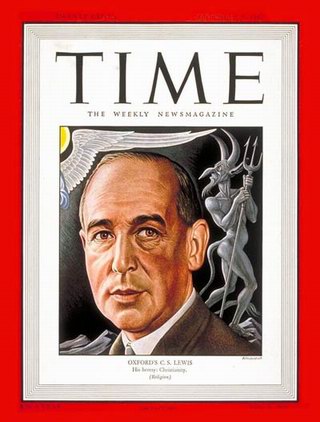 C.S Lewis’ first name was Clive; a name he hated even as a little boy. His dog was named “Jacksie” and when Lewis was four years old, his dog was run over by a car near his home in Belfast, Ireland. After the death of his dog, Lewis told his family that from then on he would only answer to the name “Jacksie.” Thankfully his family and friends shortened his nickname to “Jack.”
While thinking about the deaths of these two “Jacks,” I began wondering which of them had the greatest impact (for good) on the world. Of course, this is a question that only God knows the answer to. In this respect, they’re no different from any of us. We can only testify about people that have had an influence on us personally.
As most of you have seen, there are many television programs commemorating the death of JFK this week and there’s nothing much any of us could add to the coverage. But, like fifty years ago, I haven’t seen anything on TV commemorating the death of C.S Lewis. Through Lewis’ books, and the movies that were made from his books, Christians of all ages feel a personal connection to “the other Jack.” It’s a rare person that can captivate children with stories like “The Chronicles of Narnia” and turn around and challenge cynical adults with books like “Mere Christianity.”
In commemoration of “The Other Jack,” I’d like you to read about three well-known men whose lives were transformed after reading the words of The Other Jack.”
The former “arrogant atheist:”
 Dr. Francis Collins: former leader of The Human Genome Project, current Director of the National Institutes of Health
“Somebody pointed me towards C.S. Lewis’s little book called Mere Christianity, which took all of my arguments that I thought were so airtight about the fact that faith is just irrational, and proved them totally full of holes. And in fact, turned them around the other way, and convinced me that the choice to believe is actually the most rational conclusion when you look at the evidence around you. That was a shocking sort of revelation, and one that I fought bitterly for about a year and then finally decided to accept. And that’s a book I go back to regularly, to dig through there for the truths that you find there…”
After finishing his work with the Human Genome Project, Collins wrote a book titled, “The Language of God.” “The God of the Bible is also the God of the genome,” he writes. “He can be worshiped in the cathedral or in laboratory.”
The former corrupt Presidential adviser:
 Charles “Chuck” Colson: Nixon adviser who was snared by Watergate
Colson described his conversion to Christianity as a post-Watergate moment when a friend read him a passage from C.S. Lewis’s Mere Christianity about pride. “I spent an hour on the side of the road right next to my friend’s home, crying, thinking about my wife, wanting to know God, wanting to be clean. ”
After serving seven months of his prison sentence, Colson founded Prison Fellowship, a Christian outreach to prisoners and ex-prisoners that would eventually become the largest ministry of its kind in the United States.
“As long as you are proud you cannot know God. A proud man is always looking down on thing and people: and, of course, as long as you are looking down you cannot see something that is above you.”
― C.S. Lewis, Mere Christianity
The former pride-filled businessman:
 Thomas Monaghan: Founder of Domino’s Pizza, Chancellor of Ave Maria University

Monaghan had just finished reading Mere Christianity and could not get the chapter titled “The Great Sin” (pride) out of his head. “[It] hit me right between the eyes.” “I realized that all I was trying to do was have more than other people…I thought, ‘If pride is the greatest sin of all, I’ve got to be the greatest sinner of all.”
That night, Monaghan was barely able to sleep. He awoke the next morning and proclaimed that he was taking what he calls a “millionaire’s vow of poverty.” He immediately stopped construction on his new mansion and began selling his “toys;” expensive cars, yacht and even the Detroit Tigers baseball team.
Even if a person lives to be a hundred, it’s nothing compared to eternity. For good or bad, the legacy we leave influences people for generations. They might have phrased it differently, but I believe this is what all three of these men came to realize. It’s something we all should keep in mind.
A Lesson We Learned From Our Honeymoon
Last Saturday (11/2) Mary and I celebrated our 28th wedding anniversary. Recently we were telling someone about our crazy honeymoon and I thought my blog friends might find interesting too.
I suppose to varying degrees all marriages have a mix of the good and the bad; memories you cherish and other times you wish you could forget. Our honeymoon was some of both also.
We bought our first home three months before our wedding and I moved in and began fixing it up. Buying a home and fixing it up turned out to be more expensive than we anticipated so our honeymoon plans had to be drastically scaled back.
I found a good deal for a week at a resort in a popular destination south of the border (for reasons that will become clear, I won’t name the location). The first four days of the trip were great; beautiful weather, great food and fun activities like snorkeling, parasailing and other fun things honeymooning couples do, but then came day five…
After a nice breakfast by the pool, we wandered into the hotel lobby and began browsing through the rack of activity brochures. Most of the local activities were either too expensive for our limited budget or uninteresting to us. But then we saw a brochure that interested both of us; a four hour guided horseback riding trip up a mountain trail along a beautiful flowing creek. The trip even included lunch at a picturesque mountain-top restaurant before turning around for the trip back down the mountain.
We handed the brochure to the concierge and asked him to book us. He made a call and informed us that activity was already sold-out for that day, but he knew of another guide that could take us up the mountain to the same restaurant shown in the brochure. Without asking questions, we told him to call and book us.
We became a little concerned when we arrived at the “stables” and saw that the location was a long way from the scenic mountain trail located behind the large stable featured in the brochure. We became more concerned when our “tour guide” turned out to be a skinny teenager that didn’t speak English. And we became even more concerned when we realized that we were the only people going on the trip with our young guide.
Pushing aside the cautionary voices in our heads, we mounted our docile horses. Our guide’s horse wasn’t as cooperative as our horses were; it moved from side-to-side and bucked as he was trying to get on.
After finally getting on his horse, our guide led us along the shoulder of the busy street, away from the entrance to the mountain trail. After waiting for a lull in the traffic and galloping across the street, we started up a dirt road. It quickly became clear to us that this was not going to be anything like the romantic horseback ride shown in the glossy brochure. The dirt road didn’t lead to a trail, it was the trail; a switchback road weaving by shack after shack. We had never seen such poverty.
About halfway up the mountain, we passed a dead and very bloated cow with a mangy dog chewing on its head (Mary hates when I tell that gruesome part). Our guide pointed to the cow as if his hand was a gun and shouted, “BANDITOS” and began nervously looking around and then picked up the pace.
After finally arriving at the restaurant, we saw a large group of people briskly crossing a footbridge; the footbridge that was strung across the stream we never saw on our way up the mountain. They were all American tourists like us; the horseback riding group we originally wanted to go with. It turns out that it was a good thing we didn’t join them because they were robbed at gunpoint by bandits just minutes before arriving at the restaurant. The robbers took all their jewelry and money; one older man had to be led by the hand because the thieves even stole their glasses.
Through a translator, our tour guide told us that the authorities were sending a truck to pick up the terrified people, but he felt that we’d be safe riding our horses back the same way we came up. When he saw the panicked look on our face, he shouted “Banditos go” and then pointed up at the mountains. The translator told us that our guide thought the bandits were probably hiding out in the mountains so he believed we’d be safe riding back down.
Nervously, but quickly we mounted our horses for the steep descent down the dirty switchback road. The ride up took about two hours, but we were going to make it down a lot faster than that, or so we thought.
We were making good time down the steep and winding road, but about a third of the way down, our tour guide was thrown violently from his temperamental horse. We heard a loud “SNAP” as he hit the ground and screamed out. He was one tough kid because he immediately stood up and began calmly examining his broken arm. It was bad, the bone was sticking out of his forearm and he was bleeding profusely. I quickly got down off of my horse to see if I could help him.
He began motioning for me to grab his hand and yank his arm to reset the broken bone. I didn’t think this was a good idea because the bone was clearly shattered and wasn’t going to simply go back into place. But he insisted so I planted my feet and began pulling as hard as I could on the poor guy’s arm. He screamed louder than I’ve ever heard someone scream and for an instant I wondered if I had misunderstood what he had motioned for me to do. But he insisted we give it another try and this time he screamed even louder. If the banditos were taking a siesta in their mountain hideaway, I was sure our screaming tour guide had woken them up.
For all we knew this kid was in shock and wasn’t thinking straight so I decided to take charge of the situation. We had to get him down off of the mountain and to a doctor right away. I wrapped his arm with a cloth and helped him get on the back of Mary’s horse. I pulled his unpredictable horse behind me.
After a long slow trek down the mountain we finally arrived back at the busy street. We tried repeatedly to flag down a car to take him to a doctor, but there were no Good Samaritans on the road that day. He finally motioned for us to bring him back to the stable, which we did. I insisted on giving him some cash to help pay his medical expenses, but he refused to take my money.
We were hot, exhausted and extremely thirsty when we finally arrived back to our hotel room. Because the cost was so outrageous, we had agreed not to eat or drink anything from the mini fridge in our room, but we decided to make this one exception. I quickly grabbed a bottle of Sprite and we took several large gulps. When the bottle was almost gone, Mary stopped me as I went to take another drink – the bottle was full of tiny bugs, hundreds of them. Obviously the bottle washing machine was broken the day this bottle was filled.
We decided to put our crazy morning and afternoon behind us and make the most of that night. We made reservations at a casual restaurant that the concierge, the same concierge, had recommended.
After a shower and a short nap, we were surprisingly rested and refreshed when the cab picked us up to take us to the restaurant. The drive up to the oceanfront restaurant was beautiful with the tree-lined mountains on one side and the sun setting over the ocean on the other side. Finally something that qualified as romantic on our honeymoon, but it was short-lived…
 We forgot to bring Mary’s good camera on the trip, but even with the cheap camera we picked up at a drug store, you can see from the picture that the view from the restaurant was spectacular. The food was as good as the view, but taste and appearances can be deceptive…
By the time Mary and I arrived at our hotel room, we were violently ill; it was obviously a severe case of food poisoning. From then on out, the only contact we had with each other was brushing by one another as we exchanged places in the bathroom. It was horrible; we were like Protestants visiting a Catholic Church – we didn’t know whether to kneel or sit.
I was somewhat better the following morning, but Mary was getting worse. I booked us on the next flight home and took Mary straight to the hospital. After a 24 hours in the hospital on an IV and antibiotics, she was finally well enough to go home.
Our honeymoon turned out to be a kind of a metaphor for the years that followed; there have been good times, but also some difficult mountain climbs.
Life is so unpredictable; it’s like a switchback road, you never know what will greet you around the next turn. But, if Christ is our guide, He’ll give us the grace we need to deal with any and everything that awaits us.
“Who will separate us from the love of Christ? Will tribulation, or distress, or persecution, or famine, or nakedness, or peril, or sword? …in all these things we overwhelmingly conquer through Him who loved us.” (Romans 8:35-37)
The Greatest Christian I Know
Who is the greatest Christian you know?
I will give my answer to that question at the end of this post.
I realize that questions such as this could be classified by some as judging others. But the Bible does tell us to “test ourselves” (2 Corinthians 13:5) and to test spiritual claims and people (1 John 4:1 & Revelation 2:2). The Bible also gives us attributes to look for when conducting these examinations of ourselves and others.
Here are some of the attributes (of great Christians) that I’ve found in the Bible:
- Compassionate, Kind, Humble, Gentle, Patient, Bearing the burdens of others and Forgiving (Colossians 3:12-13)
- Encouraging and Building-up others (1 Thessalonians 5:11).
- A reader and a “doer” of God’s word (James 1:22).
- Hospitable, Sensible, Just, Devout and Self-controlled (Titus 1:8).
- Loving, Joyful, Peaceful, Faithful (Galatians 5:22)
- Prayerful, Thankful (to God and others) and Hopeful (Colossians 1:3-5).
If you tested yourself by the above criteria and concluded that you deserve an A+ on every one these virtues, you’re either delusional or off-the-charts self-righteous. Everyone, even the person I chose as “The Greatest Christian I Know,” struggle with some of these.
But, according to Jesus, a truly great Christian possesses one quality that sets them apart; “But the greatest among you shall be your servant.” (Matthew 23:11)
![“True greatness, true leadership, is achieved not by reducing [people] to one’s service, but by giving up oneself in selfless service to them.” Oswald Chambers](https://unshakablehope.com/wp-content/uploads/2013/10/servant.jpg)
“True greatness, true leadership, is achieved not by reducing [people] to one’s service, but by giving up oneself in selfless service to them.” Oswald Chambers
I think of people like my sister and her husband who care for their 18 year-old severely Autistic son. People like my mother-in-law who took care of her ill husband until he recently passed away. And even paid caregivers, like the woman that helps Mary take care of me, qualify as “Great” in my book.
But the Greatest all-around Christian I know is Mary, my wife and best friend of 28 years. Since being diagnosed with ALS years-ago, she’s also been my full-time caregiver. She is the best example I know of a truly selfless servant.
And, no, I didn’t just choose her as the greatest Christian out of fear that she’d stop feeding and clothing me.
“…whoever wishes to become great among you shall be your servant, and whoever wishes to be first among you shall be your slave; just as the Son of Man did not come to be served, but to serve…” (Matthew 20:26-28)
Viewing Ourselves in the Third-Person
I’ve heard people tell self-centered kids or those who otherwise feel entitled that “It’s not all about you.” We might not be that blunt, but I think all parents that are trying to raise selfless and grateful kids try to convey this message to them in one way or another.
Like many from my generation, my parents had more subtle ways of conveying this message; like when we didn’t eat all the food on our plate, they’d remind us that people in China were starving. Or when we asked for new shoes they would tell us about African children they saw in National Geographic that have never even worn shoes (I don’t know if my mom brought up the African women in National Geographic when my sisters asked for a new bra).
Regardless of how it’s said, the message is that we should be grateful for what we have and that the world doesn’t revolve around us; we have to view lives in the context of the whole world.
I thought about this recently while reading the Bible. I hadn’t really noticed it before, but I now believe this “It’s not (just) about us” message is Biblical. I think this is the reason that most of the New Testament, including all four Gospels, were written in the third-person.
For instance, Mathew wrote the following (about himself) as if he was a casual observer watching this unfold from fifty feet away: “As Jesus went on from there, He saw a man called Matthew, sitting in the tax collector’s booth; and He said to him, “Follow Me!” And he got up and followed Him.” (Matthew 9:9)
In his Gospel, John adds some mystery to his third-person account by referring to himself as “The disciple whom Jesus loved.” John never reveals that he’s the author of the fourth Gospel until the end of the last chapter.
But my favorite example of this third-party writing is the Apostle Paul. If you didn’t know his writing style and something about Biblical history, you might think he’s schizophrenic when you read the following: “I know a man in Christ who fourteen years ago…was caught up into Paradise and heard inexpressible words…” (2 Corinthians 12:2-4) It’s only when you read the whole chapter that you discover this mystery man that Paul was referring to was himself. It seems that Paul had what people today would call an “Out of Body experience.”
Paul wrote about everything that God did in and through him in the third-person. As he says in the first verse (of the same chapter) that “Boasting [in the first person] is foolish.” But he goes on to say that speaking (in the first-person) about his “weaknesses” (sins, temptations and overall human frailties) is good and necessary (in order to relate to others). A few verses later, Paul gives God’s answer to his prayer about one of his weaknesses. It’s one of my favorite verses, but it can only be fully understood if read in the context of this whole chapter:

By speaking and actually viewing themselves in the third-person, I believe that Paul and the other Apostles were following the example of Christ. Jesus referred to Himself (in the third-person) as “The Son of man” or “The Son of God” when speaking of His mission and when He performed miracle etc (“For the Son of Man has come to seek and to save that which was lost.” Luke 19:10), but He spoke in the first-person in regards to His human weaknesses; while hanging on the cross, He didn’t say “The Son of man is thirsty;” He said “I thirst” (John 19:28).
I thought about how different this was from many people today. We hear many people (think politicians) boasting about their accomplishments in the first-person and speaking about their human frailties in the third-person – as if some literal third-person was to blame.
Here are a few other things that I learned from this study:
- First-person thinking is natural; third-person thinking is intentional.
- Those who view their life in the third-person filter everything through the eyes of God and through the eyes of others; this is why John identified himself as the “The disciple whom Jesus loved.”
- To fulfill verses like the following, we must take a third-person view of ourselves “In everything, therefore, treat people the same way you want them to treat you…” (Matthew 7:12)
- Hypocrisy and self-righteousness are sins only committed by those who view themselves in the first-person.
- Legalism/religion is for those who view themselves in the first-person; grace comes to and through those who view themselves in the third-person.
- Those who view themselves in the third-person (through the eyes of God and others) have a much easier time ignoring their negative first-person thoughts.
I think Christians should follow the example of Jesus and His disciples – we should own our weaknesses and credit God for the good He does in and through us. To be a Christian is to be a servant of God and of others; It’s not (just) about us.
 Unshakable Hope